
WHERE
Phelps Lab 101
1953 Museum Rd, Gainesville, FL 32611
This month’s forum will feature Juan Torres, a Ph.D. candidate in UF’s Department of Civil and Coastal Engineering, who will share his research on whether the Gulf Stream weakens evenly along the Florida Shelf. Scott Lee Young, a Ph.D. candidate in UF’s Department of Civil and Coastal Engineering, will also give a talk on a method called dynamic mode decomposition.
 |
Does the Gulf Stream weaken uniformly along the Florida Shelf?
Abstract: The Gulf Stream is a key component of the Atlantic circulation system, playing a central role in regulating climate and coastal dynamics, yet its long-term variability remains unclear. Using three decades of satellite altimetry and supporting model output, we assess transport trends along the Florida Shelf. Results show a pronounced decline within the Florida Straits but no consistent weakening downstream, indicating spatially non-uniform changes. These findings emphasize the importance of resolving along-stream variability when evaluating Gulf Stream dynamics. Bio: Juan Torres is a second-year Ph.D. student at the University of Florida in Coastal and Oceanographic Engineering. His dissertation advances understanding of wind-driven subtidal dynamics in semi-enclosed basins, focusing on the interplay between local and remote forcing effects. This work will culminate in a unifying dynamical framework that organizes diverse semi-enclosed basins in terms of their dominant forcing regimes. |
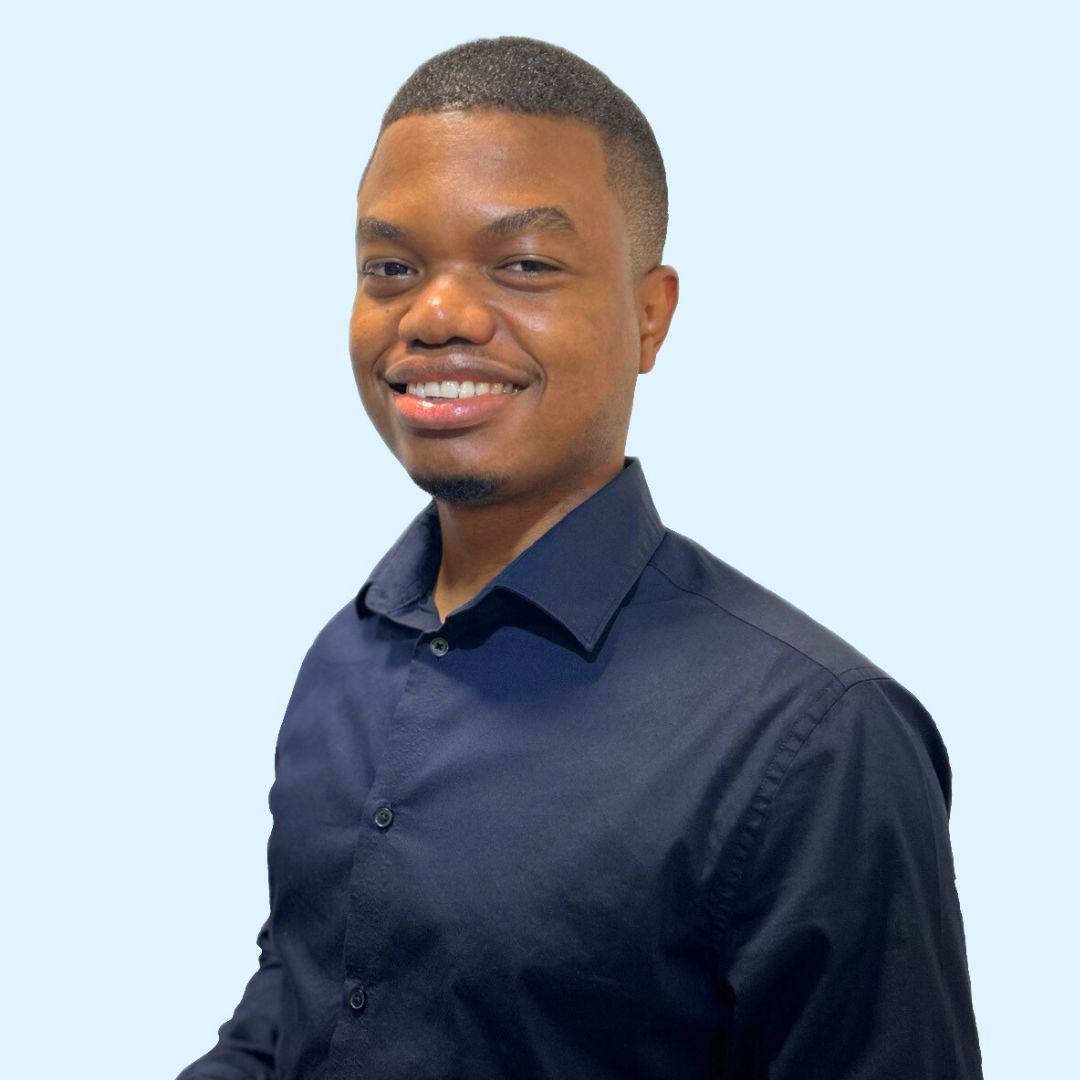 |
The application of dynamic mode decomposition to coastal science
Abstract: Dynamic mode decomposition is a statistical method that can be used to decompose spatiotemporal datasets into coherent modes, their time dynamics, and frequencies. It finds application in many fields including neuroscience, fluid dynamics, climatology and epidemiology. Bio: Scott Lee Young is a Ph.D. candidate in Civil and Coastal Engineering at the University of Florida, studying estuarine hydrodynamics and its influence on hypoxia. His work combines statistical analysis and numerical modeling towards predicting water quality. He is a Melnick Scholar, and former CERF Rising Tides Fellow and Fulbright Scholar. |
WHAT TO EXPECT EACH MONTH
Welcome & Center Updates
Quick highlights of upcoming events, project news and opportunities.
Science Talks / Skills Workshops
Two 15-minute presentations from undergrads, grad students, postdocs, faculty, or visiting speakers, with time for Q&A. Topics and disciplines rotate monthly for a fresh mix of ideas.
Some months, we will also feature mini workshops on professional development (e.g., how to make a great research poster, CV tips) or research skills from faculty and visiting experts.