
By Megan Sam
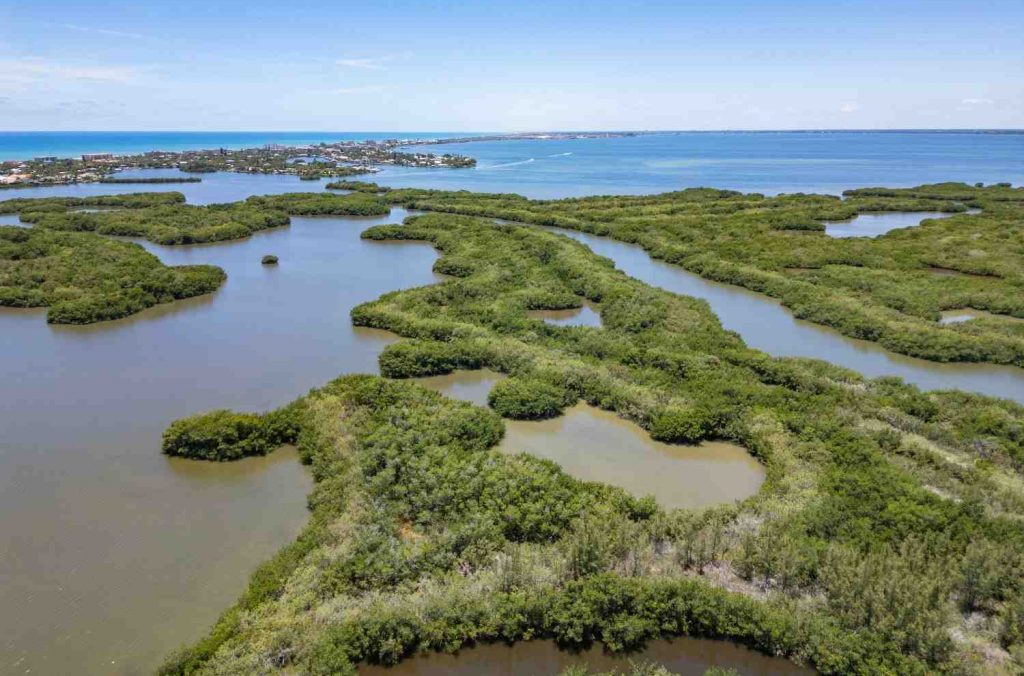
From just 39 clams, University of Florida (UF) researchers are sparking an ecological revival in the Indian River Lagoon. Once home to thriving clam beds, the estuary’s clam population collapsed by the early 2000s, after decades of overharvesting in the ‘80s and ‘90s and a series of devastating algal blooms. Nearly wiped out, these clams — vital for filtering water and building habitat — were all but lost. But Todd Osborne, Ph.D., a professor in UF’s Department of Soil, Water and Ecosystem Sciences, saw a path to recovery: if any clams had survived, their resilient genetics might hold the key to restoring the species — and the health of the lagoon.
“Fixing the Indian River Lagoon or any ecosystem that provides enjoyment and livelihood for so many people gives me a purpose beyond my research and publishing papers,” Osborne, an affiliate faculty of the UF Center for Coastal Solutions, said. “I love to make discoveries and mentor students as many of us do, but being able to rapidly apply research findings and teaching efforts to solving a real-world problem is my holy grail and I found that in this clam restoration work.”
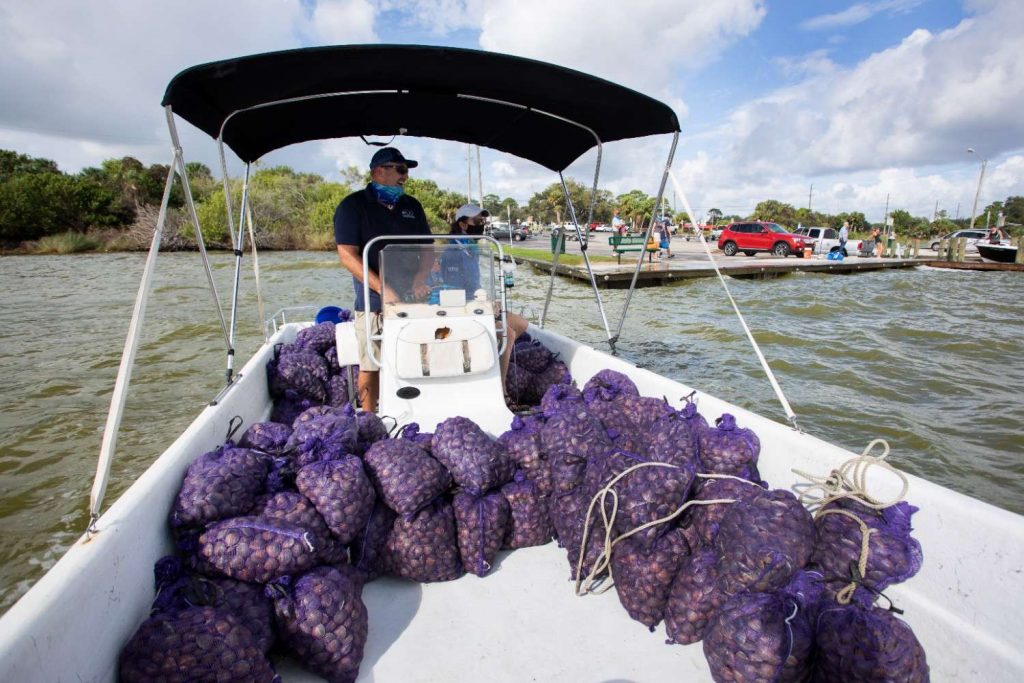
In 2018, Osborne and his team spent eight weeks combing the lagoon in search of clams that had survived the harmful algal blooms. The group — which included Jose Nuñez, a biologist at the Whitney Laboratory for Marine Bioscience, Mike Sullivan, owner of Premium Seafood, and captain Blair Wiggins, host of Blair Wiggins Outdoors — found just 39. From those few survivors, the team produced nearly 10 million juvenile clams at the Whitney Laboratory for Marine Bioscience in St. Augustine, Florida. By mimicking springtime temperature cues, the team carefully managed the clams’ reproduction, then raised the juveniles in large mesh bags submerged in the river. Over the course of 14 to 16 months, each bag produced hundreds of pounds of adult clams and sediment. Within a year, the team restocked 2.5 million of these adult clams into the lagoon, rapidly rebuilding the population.
While the method worked, it was labor intensive, requiring heavy lifting, hauling and planting clams by hand. To scale up restoration efforts more efficiently, the team began exploring faster, less physically intensive solutions.
In 2023, Osborne’s team partnered with Ernest Hale of Blue Ocean Quest to pioneer a high-tech method of dispersing clam seeds with a drone. The drone is designed to gently disperse clam seeds from the air, a method that minimizes environmental impacts by keeping personnel out of sensitive areas and preventing disturbance to the seafloor. In just 10 to 15 minutes, it can release up to a million clam seeds across an acre of water. This approach not only saves time but ensures even distribution. By releasing so many at once, the clams flood the system, leaving predators unable to keep up and giving baby clams a better chance at survival.
So far, the program has repatriated about 25 million clams, with first-year survival rates holding steady at 60 to 70%. The results show that clam restoration is working, but the team isn’t stopping there. The next step is to link clam restoration with seagrass recovery to fast-track overall ecosystem restoration.
This ambitious effort is supported by a wide range of partners, including the Indian River Lagoon National Estuary Program, the Florida Fish and Wildlife Conservation Commission, and the Coastal Conservation Association. Additional outreach support has come from several organizations and dedicated individuals who have contributed their time and expertise. Osborne stresses that it is this kind of collaboration that makes large-scale restoration efforts like this possible.
“Solutions don’t always have to be complex, and everyone has something they can do,” Osborne said. “There is power in the community that appreciates our natural resources. Florida is unique, and we all share responsibility to keep it that way. Find your role — engage with it — and help keep our Florida intact!”